
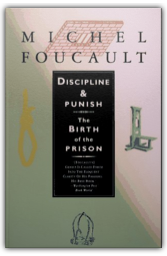
In this brilliant work, the most influential philosopher since Sartre suggests that such vaunted reforms as the abolition of torture and the emergence of the modern penitentiary have merely shifted the focus of punishment from the prisoner's body to his soul. 
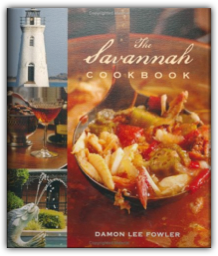
For hundreds of years, Savannah has charmed residents and visitors alike with its fine old architecture, wide, cobbled streets and romantic moss-draped trees. Though less widely known than its haunting beauty and fabled eccentricities, part of the enchantment of Savannah is its cuisine. Blending European, Asian, and West African customs Damon Lee Fowler introduces The Savannah Cookbook, offering recipes for Southern classics such as rice and grits, soups and stews, poultry, fish and meat dishes, as well as a helpful chapter on pantry basics. |
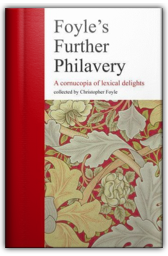
This book is a must-have for everyone who enjoyed Foyle's Philavery. Like its predecessor, it brings together a plethora of words which appeal on account of their unusual sounds and meanings and which hint at the rich history of the English language. In this second collection, even more emphasis is given to the fascinating stories behind these weird and wonderful words. 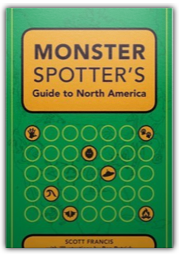
Like a Bird Watching Guide... Only for Monsters. 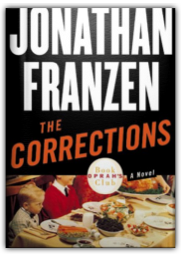
Jonathan Franzen's exhilarating novel The Correctionstells a spellbinding story with sexy comic brio, and evokes a quirky family akin to Anne Tyler's, only bitter. Franzen's great at describing Christmas homecomings gone awry, cruise-ship follies, self-deluded academics, breast-obsessed screenwriters, stodgy old farts and edgy Tribeca bohemians equally at sea in their lives, and the mad, bad, dangerous worlds of the Internet boom and the fissioning post-Soviet East. 
Jonathan Franzen is smart and brash, the kind of person you want as your social critic but not as a brother-in-law. Many of the 14 essays in How to Be Alone, by the author of the critically acclaimed novel The Corrections, first appeared in The New Yorker, Harper's, and elsewhere. A long, much-discussed rumination on the American novel, (newly) titled "Why Bother?," is included, as well as essays on privacy obsession, the U.S. post office, New York City, big tobacco, and new prisons. At his best, as in "My Father's Brain," a piece on his father's struggle with Alzheimer's, Franzen can make the ordinary world utterly riveting. But at times, it can be difficult to discern where Franzen stands on any particular subject, as he often takes both sides of an argument. Valid attempts to reflect ambiguity s! ometimes lead to obfuscation, especially in his essays on privacy and tobacco, although his belief that small-town America of years gone by offered the individual little privacy certainly rings true. Franzen can write with panache, as in this comment after he watched, without headphones, a TV show during a flight: "(It) became an exposé of the hydraulics of insincere smiles." A few of the shorter pieces appear to be filler. Franzen shines brightest when he gets edgy and a little angry, as in "The Reader in Exile": "Instead of Manassas battlefield, a historical theme park. Instead of organizing narratives, a map of the world as complex as the world itself. Instead of a soul, membership in a crowd. Instead of wisdom, data."—Mark Frutkin, Amazon.ca 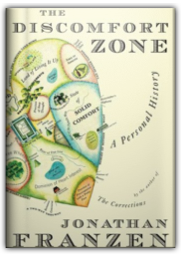
Jonathan Franzen arrived late, and last, in a family of boys in Webster Groves, Missouri. The Discomfort Zone is his intimate memoir of his growth from a "small and fundamentally ridiculous person," through an adolescence both excruciating and strangely happy, into an adult with embarrassing and unexpected passions. It’s also a portrait of a middle-class family weathering the turbulence of the 1970s, and a vivid personal history of the decades in which America turned away from its midcentury idealism and became a more polarized society. |

My Library
Collection Total:
1165 Items
1165 Items
Last Updated:
Sep 9, 2009
Sep 9, 2009
 Made with Delicious Library